How can music help?
- Dec 23, 2025
- 2 min read
When Recovery Feels Stuck: Using Music to Create Forward Motion
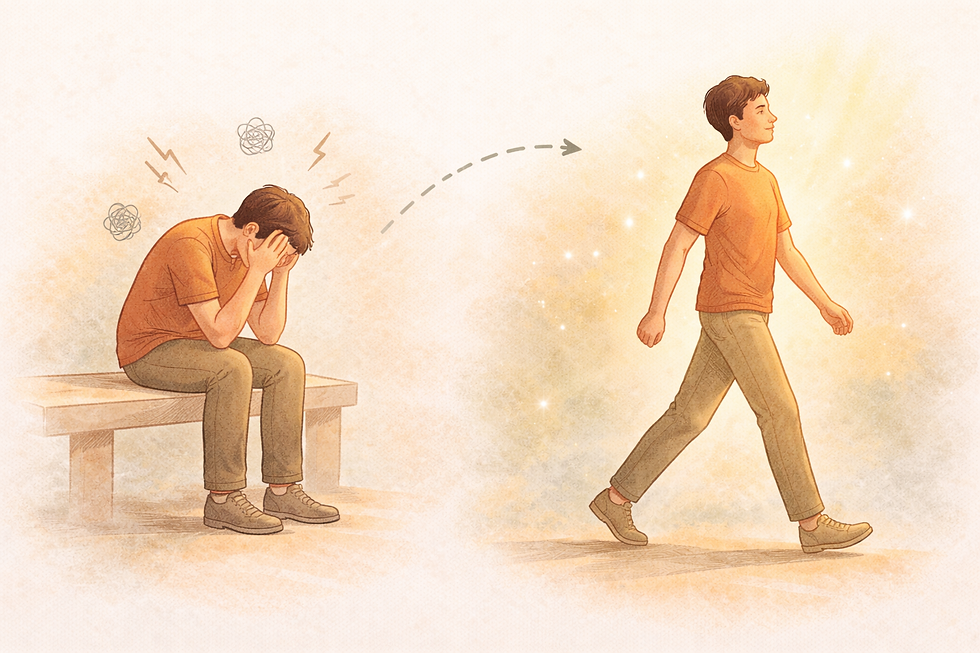
There are times in recovery when nothing feels wrong — but nothing feels right either.
And yet, everything feels flat, heavy, or stalled.
This is more common than people admit, and it doesn’t mean you’re failing. It often means your nervous system is tired — and asking for a different kind of support.
Stuck Doesn’t Mean Broken
Recovery isn’t a straight line. After the chaos quiets down, many people are left with something harder to name: restlessness, numbness, or low-grade anxiety.
Substances once filled space, regulated emotion, or created momentum. When they’re gone, there can be a gap — not because you did something wrong, but because your system is still learning new ways to move.
This is where gentle structure matters.
Why Music Helps When Motivation Is Low
Music works even when motivation doesn’t.
You just play.
Simple patterns, steady rhythm, and repetition give your nervous system something predictable and safe. Over time, that predictability turns into trust — and trust creates movement.
Music can:
Interrupt mental loops
Give shape to empty or restless time
Offer emotional release without overwhelm
Build confidence through small, repeatable actions
Even five minutes can be enough to shift your internal state.
This Isn’t About Getting Good at Music
One of the biggest barriers people carry into recovery spaces is pressure — pressure to improve, perform, or prove something.
That doesn’t apply here.
Music lessons in this space are about:
Showing up imperfectly
Learning slowly
Letting progress be quiet
Using sound as regulation, not evaluation
You don’t need talent. You don’t need discipline. You don’t need to “push through.”
You need something that meets you where you are.
Consistency Over Intensity
In recovery, consistency builds safety.
A short, repeatable music practice can become:
A daily anchor
A replacement habit
A signal to your body that you’re okay
This isn’t about big breakthroughs. It’s about small moments of relief that add up over time.
Support Makes a Difference
Learning on your own can work — but many people in recovery struggle with follow-through, self-doubt, or isolation.
Having someone to check in with can:
Reduce avoidance
Normalize setbacks
Provide gentle accountability
Keep things grounded and realistic
This is where one-on-one support can help — not by pushing, but by walking alongside you.
A Gentle Invitation
If recovery feels stalled, music can help create movement again — quietly, safely, and at your pace.
If you’re curious about working together, 1:1 music sessions offer a supportive space to build consistency, regulation, and confidence through guitar, bass, ukulele, or mandolin.
Sessions are recovery-informed and supportive, but not therapy or crisis management. They’re designed to complement your existing recovery work.
You don’t need to be ready.You just need to be willing to try.
When you’re ready, the door is open.


Comments