Why Rhythm Helps the Brain Stay Present
- Feb 7
- 4 min read

Rhythm, Emotional Tolerance, and Recovery Through Music
Most people think rhythm is just about timing.
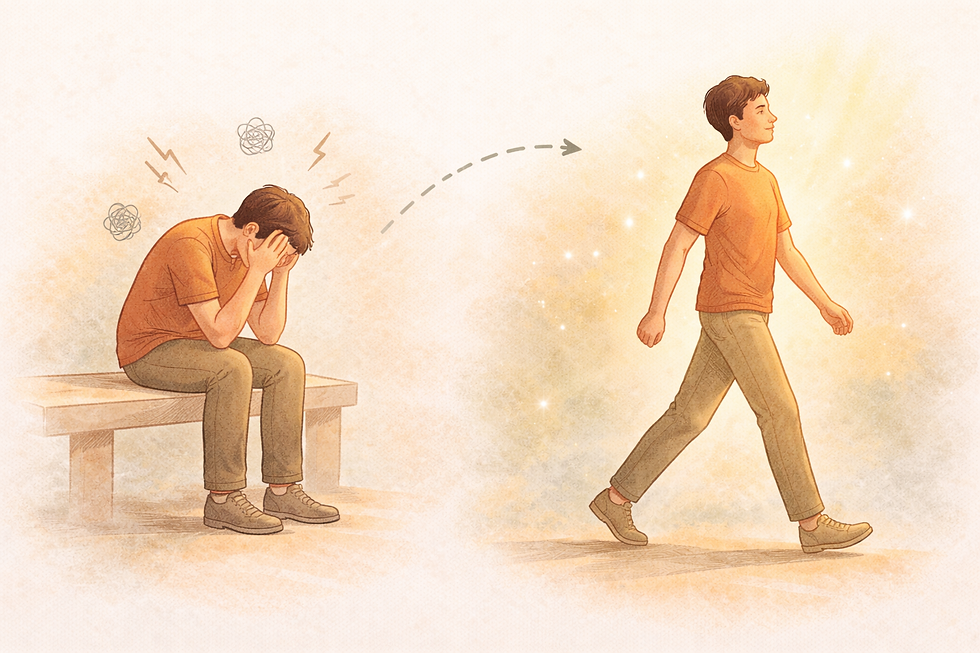
In reality, rhythm teaches something much deeper. Rhythm teaches the brain and nervous system how to stay present long enough to experience change. And for many people in recovery, learning how to stay present, especially during discomfort, is one of the most important skills to rebuild.
Music has always been more than entertainment. When practiced consistently, it becomes a structured, repeatable way to support emotional regulation and nervous system stability. Understanding the connection between rhythm and the nervous system helps explain why music can feel grounding even when emotions feel unpredictable.
Rhythm Creates Predictability and Safety
The nervous system responds strongly to patterns. Repetition and predictable timing send signals that reduce threat responses and increase feelings of stability.
Rhythm naturally provides this structure.
When you play a steady groove, repeat a chord progression, or follow a metronome, you create consistency. The brain begins to anticipate what comes next, and that anticipation reduces anxiety and internal noise. Over time, rhythmic repetition helps strengthen neural pathways associated with focus, coordination, and emotional regulation.
This is one reason rhythm-based music practice is often calming. It gives the nervous system something reliable to organize around.
In recovery, predictability is incredibly valuable. Many coping strategies that develop around substance use or masking rely on sudden emotional shifts or avoidance. Rhythm offers an alternative: steady engagement instead of sudden escape.
Music Builds Emotional Tolerance
Music naturally includes tension and release. It moves through moments of uncertainty and resolution in ways that mirror emotional experiences.
When you practice music, you are constantly encountering small challenges:
Missing notes
Losing tempo
Feeling frustration
Starting again
Each time you continue playing instead of stopping, you practice emotional tolerance. You learn that discomfort can exist without needing to be eliminated immediately.
This is especially important in recovery. Emotional waves, cravings, anxiety, and frustration often feel overwhelming because they appear unpredictable. Music helps retrain the brain to recognize that discomfort has rhythm too. It rises, holds, and eventually shifts.
Learning to stay engaged during those moments builds resilience.
How Rhythm Supports the Brain and Nervous System
Research on neuroplasticity shows that the brain strengthens connections through repeated, focused activity. Music is particularly powerful because it engages multiple systems simultaneously, including movement, auditory processing, memory, and attention.
Rhythm coordinates these systems in a unique way. Keeping time requires communication between different regions of the brain, reinforcing neural pathways that support coordination and emotional regulation.
This is why consistent rhythm practice can improve focus and stability over time. The brain begins to associate repetition with safety and predictability rather than pressure or performance.
The relationship between rhythm and the nervous system is not about intensity or perfection. It is about consistency. Simple, steady practice sends strong signals to the brain that reinforce regulation.

Learning to Stay With Discomfort
One of the most valuable lessons music teaches is how to continue through imperfection.
When practicing rhythm, you will lose the beat sometimes. You will feel frustration. You will want to stop. Returning to the groove instead of abandoning it teaches something powerful: discomfort does not require escape.
In recovery, this translates directly to emotional experiences. Anxiety, cravings, and overwhelm often lose intensity when they are experienced safely rather than avoided. Music creates a contained environment where discomfort can exist without taking control.
Staying with rhythm becomes a physical and emotional rehearsal for staying present during difficult moments in life.
Why Simple Rhythm Practice Is So Effective
Many people assume progress in music requires complex exercises or long practice sessions. While advanced work has its place, simple rhythm practice often provides the strongest nervous system benefits.
Slow, repetitive patterns:
Reduce mental overload
Build coordination gradually
Reinforce neural stability
Increase confidence through familiarity
Simple rhythm practice also supports consistency. On low-energy days, maintaining a steady groove or repeating a familiar progression keeps the brain engaged without adding pressure. This type of practice strengthens existing neural pathways while maintaining emotional connection to the instrument.
Consistency is often more important than complexity.
Rhythm Mirrors Recovery
Recovery itself follows rhythm. Progress rarely moves in straight lines. Instead, it cycles through periods of stability, challenge, adjustment, and return.
Music reflects this naturally. Tension and release exist in every phrase, progression, and beat. Practicing rhythm teaches acceptance of these cycles rather than resistance to them.
Over time, rhythm becomes more than musical timing. It becomes a reminder that steadiness is built through repetition, patience, and continued return.
Using Music as a Grounding Practice
Music does not remove discomfort or eliminate emotional challenges. What it offers is a structured, supportive way to move through them.
Consistent rhythm practice helps the nervous system:
Develop tolerance for emotional waves
Strengthen focus and attention
Build stability through repetition
Reinforce safe engagement instead of avoidance
For many people in recovery, music becomes a quiet but powerful anchor. It creates space to experience emotions without needing to suppress or escape them.
Moving Forward
Learning to stay present is rarely dramatic. It happens slowly, through repeated moments of choosing engagement instead of avoidance.
Rhythm supports that process. It teaches the brain that tension changes, discomfort passes, and stability can be built one repetition at a time.
Music does not demand perfection. It invites consistency. And over time, consistency becomes regulation.
Sources & Further Reading
The relationship between music, rhythm, and brain regulation is supported by research on neuroplasticity and nervous system function. These sources provide accessible, non-technical explanations:
• Harvard Health Publishing – Why music benefits brain function https://www.health.harvard.edu/blog/why-is-music-good-for-the-brain-2020100721062
• Harvard Medical School Magazine – Music and brain coordination
• National Institutes of Health – Music training and neural plasticity
• The Dana Foundation – Music and brain research https://dana.org/article/music-and-the-brain/
Closing Invitation
If you are curious about using music as a steady, grounding practice — especially during recovery or burnout — I offer 1:1 sessions focused on simplicity, consistency, and meeting you where you are.
You can learn more about working together below.


Comments