Masking and Burnout: When Coping Starts to Cost More Than It Helps
- Feb 1
- 3 min read
Masking isn’t something most people consciously choose. It develops slowly, often early, as a way to move through the world with fewer questions, fewer comments, and less friction. You learn what’s expected. You learn what’s tolerated, and you adjust. Not to impress anyone, just to fit in, to get through the day.

What Masking Really Is
Masking is the habit of hiding, reshaping, or managing parts of yourself to feel safer or more acceptable.
It can look like:
Staying busy so you’re not noticed
Editing your reactions before they show
Performing competence even when you’re overwhelmed
Matching other people’s energy instead of your own
Keeping discomfort quiet
From the outside, masking can look like strength, capability, or control. On the inside, it often feels like constant effort.
Why Masking Leads to Burnout
Masking works wonderfully, until it doesn’t.
The problem isn’t masking itself. It’s the energy cost of doing it all the time.
Burnout doesn’t usually come from one big collapse. It builds quietly through:
Long stretches of self-monitoring
Never fully resting
Always being “on”
Losing touch with what you actually need
When you’re masking constantly, even neutral days require effort. Over time, that effort adds up, and the body eventually takes a break whether you want to or not and it's never pretty.
Masking, Burnout, and Recovery
In recovery, masking often shows up in subtle ways.
You might:
Perform “being okay” instead of slowing down
Stay busy to avoid sitting with yourself
Feel pressure to show progress or stability
Struggle to rest without feeling uneasy
saying yes, when you should be saying no

Burnout in recovery doesn’t mean you’re doing something wrong. It often means old coping strategies are still running, even though the environment has changed.
Masking helped you survive. Burnout is often the signal that it’s no longer sustainable.
Why Music Helps When Words Don’t
One of the reasons music has been such a steady practice for me is that it doesn’t require explanation or performance.
You don’t have to say how you’re doing. You don’t have to match anyone else’s pace. You don’t have to be polished or productive.
You just play.
Music gives the nervous system something concrete to focus on, rhythm, repetition, sound -all without asking you to manage how you’re perceived. That creates small moments where the mask can come off without effort.
Unmasking Doesn’t Have to Be Dramatic
Unmasking isn’t about oversharing or tearing everything down. It usually starts much smaller than that.
It looks like:
Letting practice be imperfect
Choosing simple over impressive
Stopping when you’re tired
Allowing quiet to exist
exercising self awareness
These moments reduce load. They give the system a break. And over time, they help rebuild trust with yourself.
A Slower Way Forward
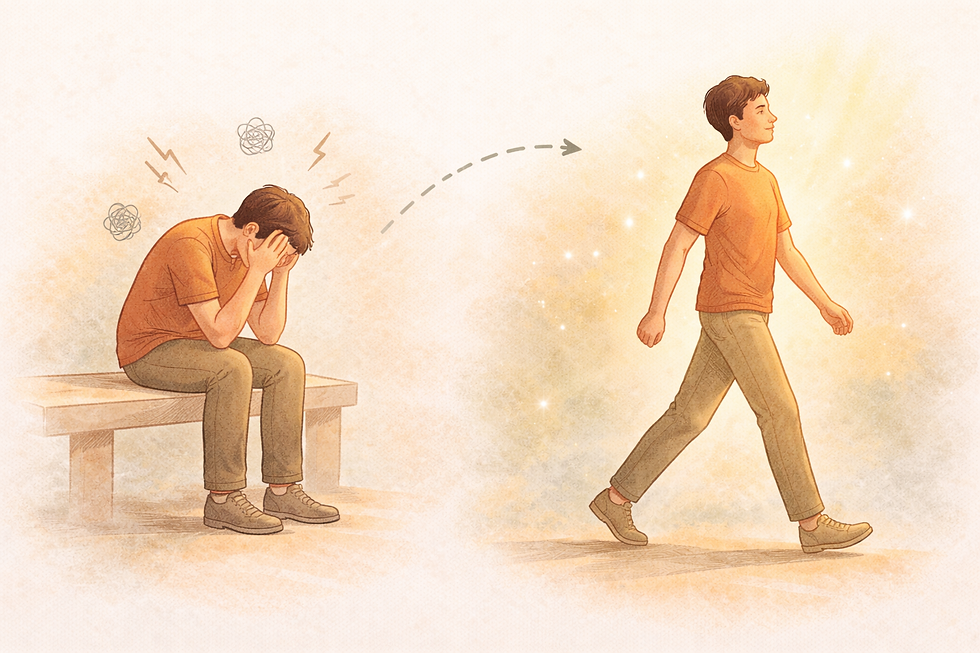
Burnout isn’t a personal failure. It’s a signal.
Often, it’s the result of coping strategies that worked for a long time, and are now asking to be adjusted.
Recovery isn’t about becoming someone new, it's becoming your authentic self. It’s about removing what you no longer need to carry. Sometimes that starts with finding one place, a practice, a routine, a few minutes with an instrument, a journal, or a paint brush, where you don’t have to perform.
That’s enough to begin easing out of burnout. Quietly, at your own pace.
f this brought something up, take your time with it. And if you’d like support using music as a place to unmask and reset, you can learn more about my 1:1 sessions below.


Comments