When Progress Feels Invisible in Recovery
- Feb 10
- 5 min read
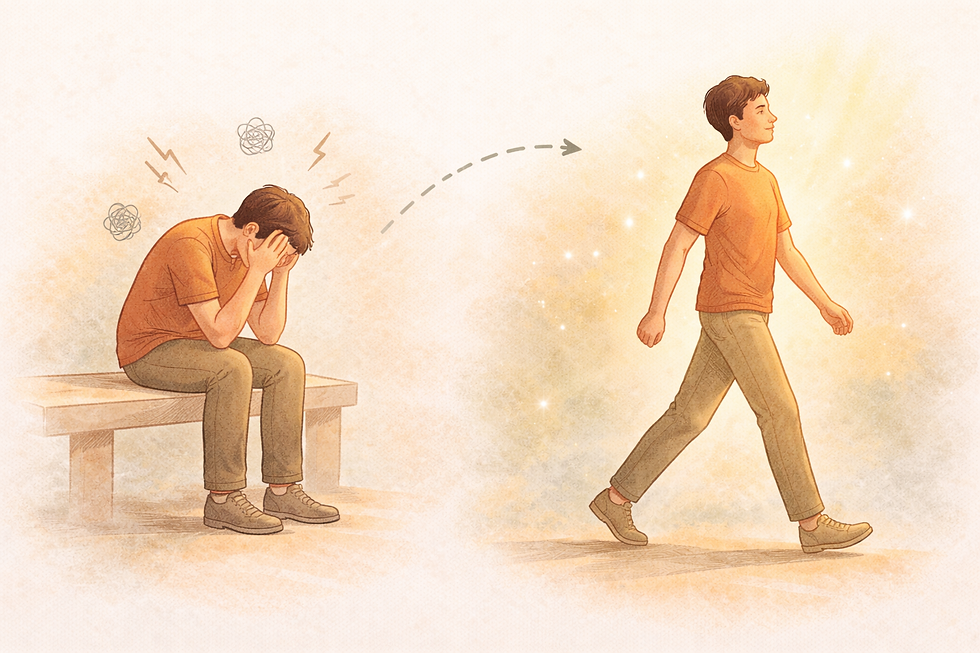
Why Growth Often Looks Like Stability, Not Breakthrough
One of the most discouraging parts of recovery is realizing that progress doesn’t always feel like progress. Many people expect recovery to bring dramatic clarity, emotional breakthroughs, or visible transformation. Sometimes those moments happen. More often, progress shows up quietly, in ways that are easy to overlook. Recovery frequently feels like nothing is changing, especially when what is actually changing is intensity, chaos, and crisis. When life becomes more stable, it can feel unfamiliar, and sometimes even unsettling.
Invisible progress is still progress. It simply speaks a quieter language.
Why Progress Often Feels Subtle
When people think about growth, they often imagine movement forward, excitement, motivation, or momentum. Recovery, however, is less about moving faster and more about becoming steadier.
Invisible progress in recovery often looks like:
Fewer emotional extremes
Shorter periods of overwhelm
Stronger awareness of boundaries
The ability to pause before reacting
Choosing stability over intensity
None of these changes are dramatic. They tend to reduce noise rather than create excitement. Because they reduce disruption instead of producing visible milestones, they can feel like nothing is happening at all. But stability is one of the strongest indicators that real recovery progress is taking place.
Why Calm Can Feel Unfamiliar
For many people, chaos and intensity became normal long before recovery began. High stress, emotional swings, and constant adaptation can create a nervous system that feels most alert when something urgent is happening.
When recovery reduces those highs and lows, the body and mind may initially interpret calm as emptiness or stagnation. This is not failure, it is adjustment.
The nervous system is learning how to exist without constant crisis. That process often feels slower and quieter than expected, but it is deeply important. The brain is relearning how to regulate itself without relying on intensity for stimulation or distraction.
Invisible Progress and How the Brain Changes
Research on neuroplasticity shows that the brain strengthens new patterns through repetition and consistency rather than dramatic breakthroughs. Small, repeated decisions gradually build stronger neural pathways that support emotional regulation, focus, and resilience.
This means progress is often measured in patterns rather than events.
Returning to steady routines, maintaining boundaries, or choosing safe coping strategies repeatedly may not feel exciting, but these actions signal long-term recovery growth.
Recovery progress is rarely sudden. It is cumulative.
How Music Reflects Invisible Progress
Music provides one of the clearest examples of how subtle growth actually works.
When someone practices an instrument consistently, improvement usually appears gradually:
Timing becomes more stable
Movements become more efficient
Mistakes become easier to recover from
Confidence develops through familiarity
These changes are rarely noticeable day-to-day. They reveal themselves over weeks or months. Recovery mirrors this process. Emotional regulation improves through repetition and consistency, not sudden insight. Music reinforces this pattern by teaching patience and presence through structured repetition. Simple, steady practice supports both musical development and nervous system regulation.
When Stability Feels Like Being Stuck
A common experience in recovery is confusing stability with stagnation.
Stagnation often involves avoidance or disconnection. Stability involves maintenance and sustainability. The difference can be subtle, but it is important.
Stability may look like:
Managing stress before it escalates
Maintaining routines without crisis
Experiencing emotions without losing control
Feeling less urgency to escape discomfort
These changes do not always feel rewarding in the moment. They often feel neutral. But neutrality is frequently a sign that the nervous system is learning to settle rather than react.
Learning to Recognize Quiet Growth
Recognizing invisible progress requires changing how growth is measured. Instead of looking for excitement or dramatic improvement, it helps to notice patterns over time.
You might begin to notice:
Situations that once triggered strong reactions now feel manageable
Recovery from difficult emotions happens more quickly
Rest feels slightly more accessible
You return to supportive habits more consistently
These are powerful signs that recovery is working, even when it does not feel dramatic.

A Simple Way to Make Progress Visible
One thing I often recommend, and something I practice myself, is taking a simple “before” and “after” snapshot. It does not have to be complicated, and it does not have to be music-based.
It might be:
A short video check-in
A photo
A few written notes
A reflection about how something feels right now
Then you leave it alone.
Thirty or sixty days later, or whatever timeframe you choose, you return and create another snapshot focused on the same area of your life. This works because it makes progress visual. When you are living inside recovery, change often happens gradually and internally. Emotional regulation improves, reactions soften, and effort decreases, but those shifts are easy to miss when they happen slowly.
Looking back creates distance. And distance makes growth easier to recognize.
Comparing 30 or 60 days often does not reveal dramatic transformation. Instead, it reveals movement, less tension, more ease, or quicker recovery after difficult moments.
This practice is not about proving anything or forcing motivation. It is about giving yourself a way to see progress when it may not feel visible.
Why Invisible Progress Matters
Invisible progress builds the foundation for lasting change. Emotional breakthroughs can feel motivating, but they are difficult to sustain without stable patterns underneath them.
Recovery that develops gradually tends to last longer because it strengthens everyday coping skills rather than relying on emotional momentum.
Over time:
Consistency replaces intensity
Stability replaces survival mode
Awareness replaces reaction
Those changes reshape identity and confidence.
Moving Forward With Patience
Recovery is rarely linear. It moves through cycles of challenge, stability, adjustment, and return. Progress often happens quietly through repeated decisions to stay present instead of escaping discomfort. Music reflects this rhythm clearly. Improvement happens through repetition, patience, and continued return to practice. Recovery follows a similar pattern.
Growth does not need to feel intense to be meaningful. Often, the most important progress is the kind that stabilizes life enough to support long-term change.
Gentle Closing Reflection
If progress feels invisible right now, it does not mean nothing is happening. It may mean your nervous system is building steadiness rather than intensity.
Recovery does not always announce itself. Sometimes it appears through quiet stability, repeated choices, and the willingness to stay present one moment at a time.
Sources & Further Reading
• Harvard Health Publishing – Brain change through repetition https://www.health.harvard.edu/blog/why-is-music-good-for-the-brain-2020100721062
• National Institutes of Health – Neuroplasticity and learning https://pmc.ncbi.nlm.nih.gov/articles/PMC7613141/
• The Dana Foundation – Music and brain research
If you are exploring recovery and looking for steady, supportive ways to stay engaged — including using music as a grounding practice — I offer 1:1 sessions focused on consistency, emotional tolerance, and meeting you where you are.
You can learn more about working together below.


Comments