Why Simple Practice Works Better Than Motivation (and Where Discipline Fits In)
- Jan 23
- 2 min read
Updated: Jan 26

Motivation is unreliable.
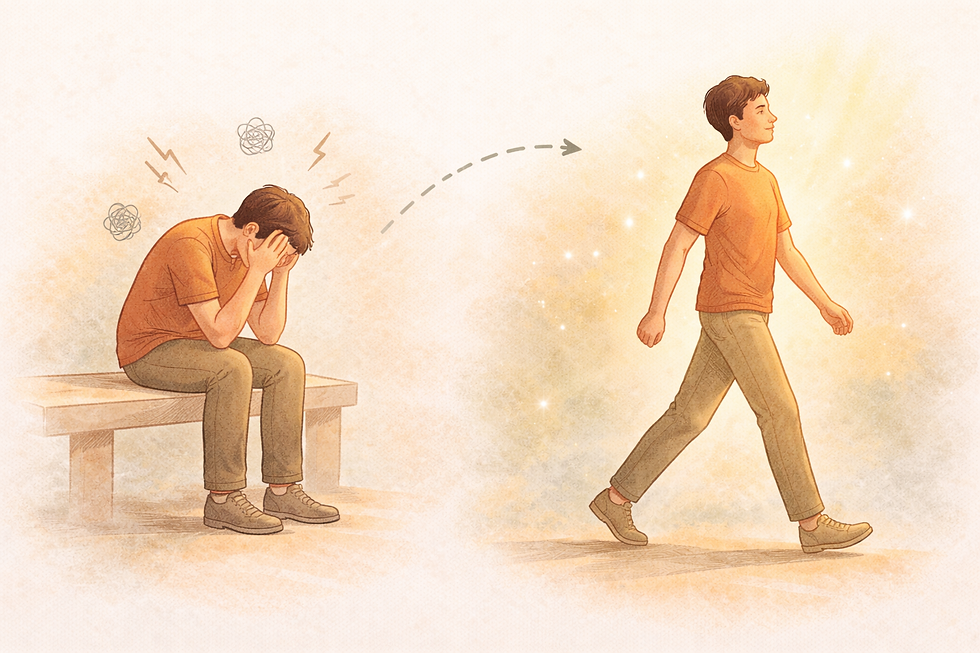
Some days it shows up ready to work. Other days it doesn’t. If you wait for motivation before you practice, long gaps start to appear not because you don’t care, but because life keeps happening. This is where simple practice matters most.
Motivation Comes and Goes
Motivation is emotional. It’s influenced by sleep, stress, weather, energy, and whatever else the day brings. Expecting it to be consistent is unrealistic.
Music doesn’t require you to feel inspired to begin. It just requires you to start.
Discipline Doesn’t Have to Be Harsh
Discipline often gets framed as forcing yourself to push through, no matter how you feel. That version usually leads to burnout.
The kind of discipline that actually works is quieter. It’s knowing how to meet the day you’re having and choosing the right kind of practice for it.
High-energy days and low-energy days don’t need the same approach.Both still count.
Simple Practice Has a Job
Simple practice exists for low-motivation days.
It’s not meant to replace deeper, more focused work. Its job is to keep the habit intact when energy, time, or focus is limited.
Simple practice:
Removes friction
Creates an easy starting point
Maintains connection to the instrument
Keeps music accessible
That might mean one scale, one rhythm, or one familiar progression. You’re not trying to expand — you’re trying to return.
Complex Practice Still Matters
When energy and focus are available, more complex practice plays an important role.
This is where you:
Learn new material
Work on technique
Explore harmony or theory
Push beyond what’s comfortable
These sessions build range, depth, and musical vocabulary. They move things forward.
But they’re hardest to sustain when they’re the only kind of practice you allow yourself.
Simple and Complex Practice Work Together
Think of simple practice as maintenance and complex practice as growth.
Maintenance keeps things functional.Growth expands what’s possible.
Skipping maintenance makes growth harder to hold onto.Relying only on growth leads to burnout.
A healthy practice needs both.
Discipline Is Knowing What to Use
Discipline isn’t about doing the hardest thing every day.It’s about doing the appropriate thing.
Some days that’s a focused, challenging session.Some days it’s five minutes of familiar material.
Showing up in either form counts.
Use What Works
You don’t need perfect motivation.You don’t need constant intensity.
You need a practice that adapts — and the discipline to return to it, even when the day doesn’t cooperate.
That’s how progress actually happens.
Ready to Conduct Your Own Recovery?


Comments